


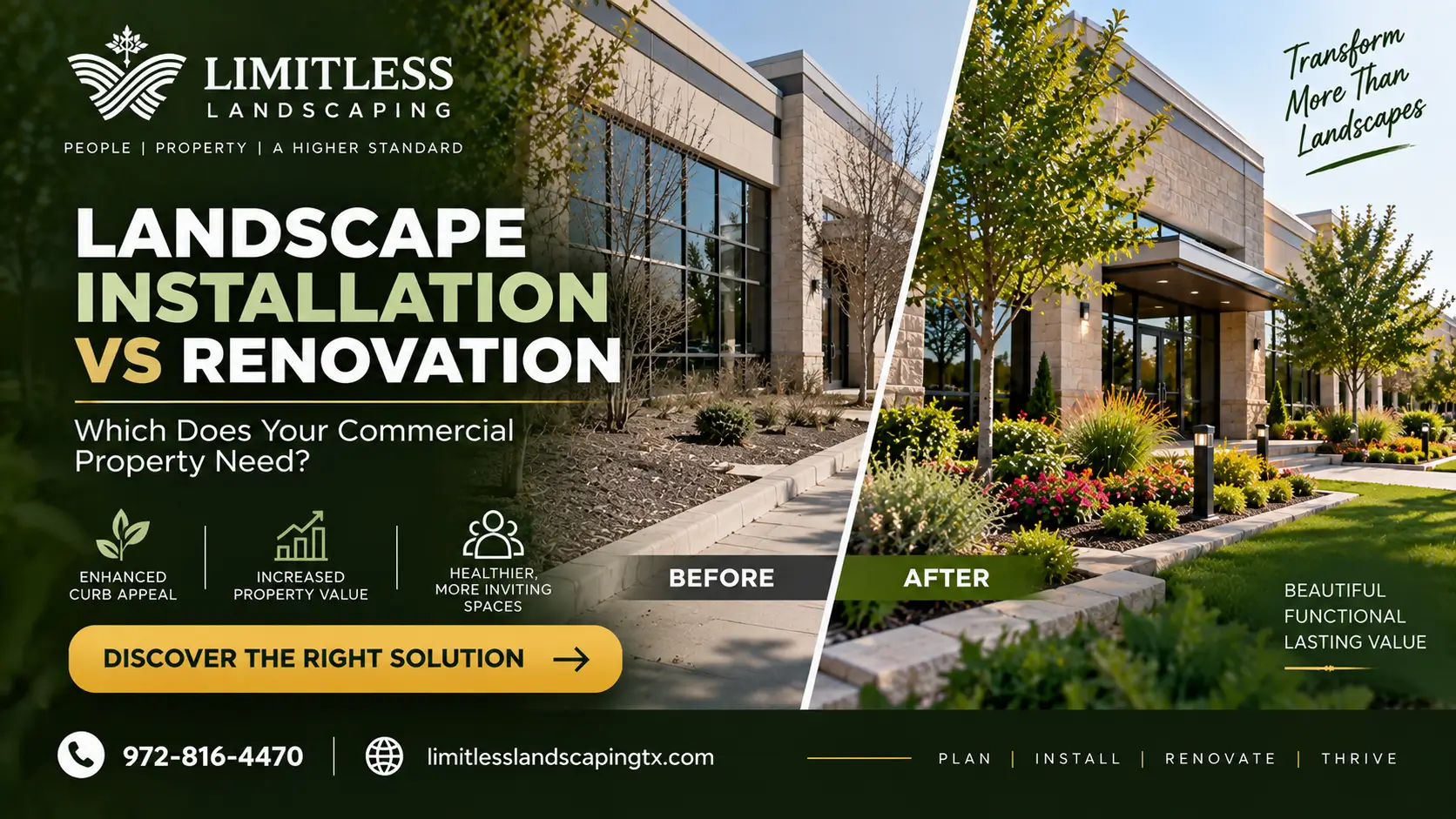
A commercial landscape can decline slowly. Shrubs become oversized, trees outgrow their original spaces, turf develops weak areas, drainage problems appear, and an entrance that once looked modern can eventually feel dated.
When that happens, property managers and business owners face an important decision: landscape installation vs renovation.
Should you improve the landscape that already exists, or would replacing major parts of it provide better long-term value?
The answer depends on the property's condition, goals, budget, drainage, plant health, and how much of the existing landscape is worth keeping.
Limitless Landscaping works with businesses, HOAs, property managers, and commercial properties across DFW to evaluate these conditions and develop an improvement plan based on the actual site.
Commercial landscape installation generally involves creating a new landscape or rebuilding a significant portion of an existing one.
It may be appropriate for new construction, major property redevelopment, or older landscapes where most existing materials no longer support the property's needs.
A complete installation can include:
Limitless Landscaping provides commercial landscape installation and landscaping services for businesses, HOAs, and managed properties throughout DFW.
A new installation may be the more practical choice when the site requires significant changes rather than small corrections.
Common situations include:
In these situations, repeatedly repairing individual sections can sometimes result in disconnected improvements.
Landscape renovation improves an existing property while preserving useful portions of the current landscape.
Instead of removing everything, the contractor identifies what should stay, what needs correction, and what should be replaced.
A renovation might involve removing declining shrubs, reshaping beds, replacing outdated plants, repairing damaged turf, refreshing mulch, improving an entrance, correcting drainage, or adding new focal points.
Commercial renovation is useful when the foundation of the landscape is still performing well.
For example, mature trees may be healthy while the shrubs underneath them have become crowded. The turf may be in good condition while the entrance beds look dated.
In these situations, replacing everything may not be necessary.
Property managers can learn more about the process in this guide to commercial landscape renovation in DFW.
The main difference is the amount of the existing landscape that can reasonably remain.
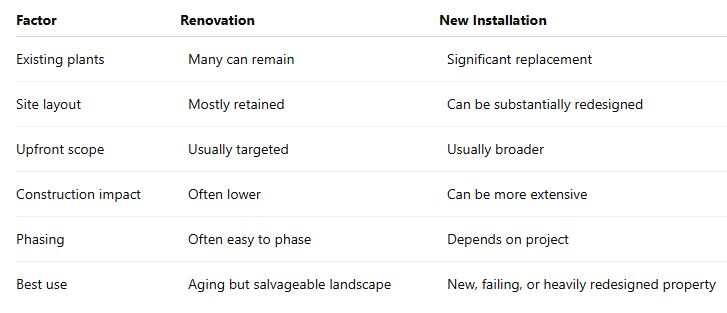
Neither approach is automatically better.
The right decision should be based on how much value remains in the current landscape.
Knowing when to renovate landscaping can protect a commercial property from unnecessary spending.
Mature trees provide scale, shade, and visual character that can take years to recreate.
If they are healthy and appropriately located, a renovation can work around them while improving the surrounding beds and turf.
Sometimes the entire property does not need work.
An entrance monument, clubhouse, leasing office, roadside bed, or building frontage may be responsible for most of the property's outdated appearance.
Improving those high-visibility areas can create a noticeable change without rebuilding every landscape zone.
If walkways, turf areas, beds, and circulation already make sense, keeping the basic layout can reduce unnecessary disruption.
New plants, cleaner bed lines, fresh materials, and strategic improvements may be enough.
Commercial properties and HOAs often work within annual capital budgets.
Renovation allows decision-makers to prioritize one section at a time while working from a larger improvement plan.
Renovation reaches a point where saving the existing landscape may no longer be efficient.
Replacing one plant at a time may create an inconsistent property if most beds are already aging or failing.
A coordinated installation can establish a more unified plant palette and appearance.
Commercial properties change.
A building may have been remodeled, tenant use may have changed, or pedestrian traffic may now move differently through the site.
A new landscape design can respond to the property as it functions today.
A serious drainage problem may require removing landscape material so soil elevations, drainage routes, or other site conditions can be corrected.
Limitless Landscaping offers commercial and residential drainage solutions when water movement needs to be addressed as part of the landscape project.
New shrubs cannot correct standing water, erosion, or improper grading.
Solving the underlying site issue first can help protect the investment made in new planting.
Property managers can simplify the landscape installation vs renovation decision by asking a few practical questions.
Walk the property and separate areas into three categories:
If the majority of the property falls into the first two groups, renovation may be reasonable.
If most of the landscape falls into the third, broader installation may make more sense.
Cosmetic issues include dated plant combinations, faded mulch, bare beds, or inconsistent shrub shapes.
Functional problems can include:
Functional problems usually deserve priority because they can continue damaging new improvements.
A retail center might need greater street visibility.
An HOA might want a stronger entrance.
An office property may want lower-maintenance landscaping around parking areas.
A landscape should support how the property is currently used rather than preserve an old design simply because it already exists.
Renovation can have a lower initial cost because useful landscape elements remain.
However, repeated small repairs can become expensive if the property actually needs broader replacement.
New installation usually requires a larger initial investment, but it can provide an opportunity to correct layout, grading, drainage, plant selection, and maintenance problems together.
Instead of asking which option costs less today, consider:
Limitless Landscaping bases estimates on project size and complexity, so a property assessment is the most reliable way to compare the two options.
Yes. Phasing can work for both renovation and installation.
A commercial property might begin with:
This approach can spread capital spending while improving the areas customers, tenants, or residents notice first.
The important step is developing an overall plan before completing the first phase. Otherwise, individual improvements may not connect well later.
Installation or renovation is only the beginning.
New and existing landscape areas require consistent maintenance to protect appearance and plant health.
The plan should consider:
A structured commercial landscape maintenance checklist can help property managers understand what should happen after improvements are completed.
Commercial projects often involve more than plant installation. Contractors may need to coordinate with property managers, HOA boards, tenants, vendors, and other trades while keeping disruption manageable.
Limitless Landscaping is family-owned and has more than 30 years of landscaping experience serving DFW.
Commercial decision-makers can review completed landscaping projects across DFW and read customer feedback for Limitless Landscaping on Google when evaluating the company for a project.
Landscape installation usually creates a new landscape or substantially rebuilds an existing one. Renovation improves an existing landscape while preserving plants, trees, turf, or layout elements that still provide value.
Renovation can make sense when the property's basic layout still works, mature trees are healthy, and only selected beds, plants, entrances, turf areas, or other features require improvement.
Full installation may be appropriate when most landscaping is failing, the site requires major drainage or grading work, the property has been redeveloped, or the existing design no longer fits current needs.
It can have a lower initial cost because existing features are retained. However, cost depends on site conditions and project scope.
If extensive repairs will still be required after renovation, broader installation may provide greater long-term value.
Yes. Phased renovation is common for commercial properties and HOAs that need to spread improvements across multiple budget periods.
High-visibility areas can often be prioritized first.
Yes. Limitless Landscaping provides commercial landscape design, installation, renovation, and ongoing maintenance for properties throughout Southlake, Westlake, Colleyville, Grapevine, Trophy Club, and the surrounding DFW area.
The landscape installation vs renovation decision should begin with the current condition of the property, not with a predetermined service.
If healthy trees, useful beds, and a functional layout remain, renovation may deliver the improvement the property needs without removing valuable existing features.
If the landscape is failing across multiple areas, no longer fits the property, or requires major functional changes, a new installation may create a stronger foundation.
For commercial properties, the best approach can also combine both strategies. Some areas may need complete replacement while other sections only require selective renovation.
Limitless Landscaping can assess the site, identify what is worth keeping, and develop an improvement scope based on the property's appearance, function, budget, and long-term maintenance needs.
If you are comparing commercial landscape renovation vs installation for a DFW property, contact Limitless Landscaping for a commercial landscape consultation and determine which approach fits your property before committing to unnecessary work.


